Cleanup after a fire can feel like traversing a labyrinth, with hidden dangers at every turn. To effectively tackle smoke and soot, you need to prioritize safety and employ the right techniques. Start by evaluating the damage and ensuring your environment is secure. Understanding how to clean effectively is essential, but knowing when to call in the professionals can make all the difference. Let’s explore these important tips in detail.
Key Takeaways
- Conduct a thorough damage assessment to identify structural issues and hazardous materials before starting cleanup.
- Use appropriate safety gear, including gloves and masks, to protect against harmful particles during the cleanup process.
- Employ a HEPA-filter vacuum for soot removal and a mild detergent solution for cleaning walls and ceilings effectively.
- Ensure proper ventilation by opening windows or using fans to improve air quality during and after the cleanup.
- Seek professional help if soot has penetrated surfaces or if odors persist despite your cleaning efforts.
Assessing the Damage and Safety Precautions
Before you begin the cleanup process, it’s essential to assess the damage and take necessary safety precautions.
Start with a thorough damage evaluation of the affected area. Identify structural issues, smoke residue, and any lingering odors.
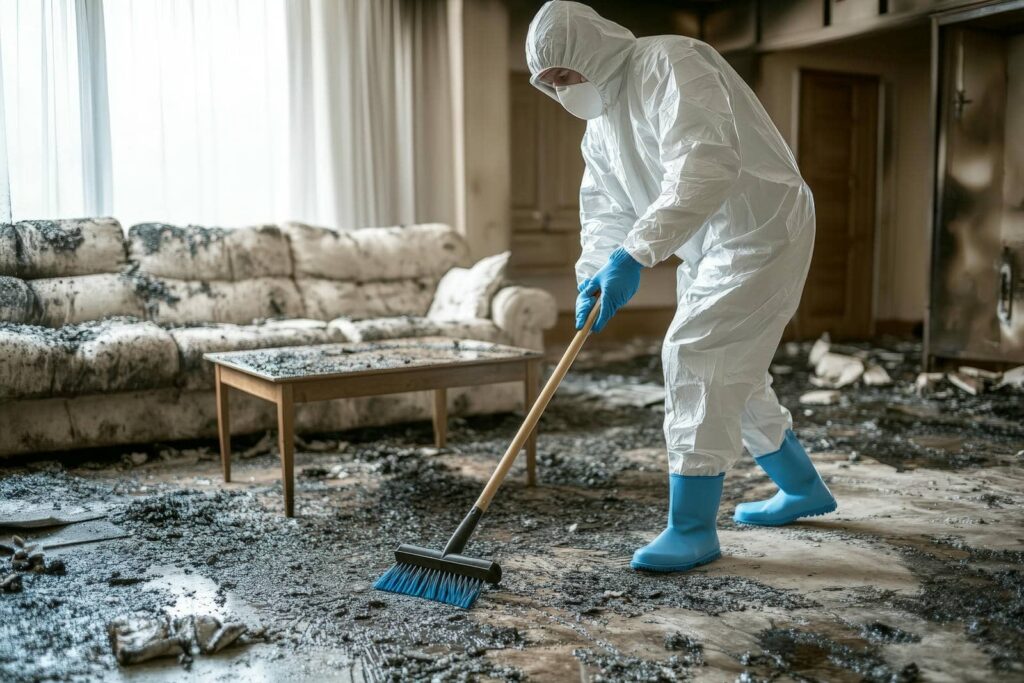
Protect yourself with appropriate safety measures—wear gloves, masks, and goggles to shield against harmful particles. Ensure ventilation by opening windows or using fans to circulate air.
If you find extensive damage or hazardous materials, consider consulting professionals for assistance.
Document everything for insurance purposes, as this will help you navigate claims more effectively.
Effective Cleaning Techniques for Smoke and Soot
Once you’ve assessed the damage and secured safety, it’s time to tackle the cleanup of smoke and soot.
Start by gathering effective cleaning products designed for soot removal; look for ones specifically formulated to break down greasy residues. Use a vacuum with a HEPA filter to capture loose particles before applying restoration methods.
For walls and ceilings, employ a mixture of warm water and a mild detergent to scrub affected areas gently. Rinse with clean water to avoid residue buildup.
Don’t forget to clean fabrics using specialized upholstery cleaners or consider professional laundering. Regularly check and replace air filters in your HVAC system to prevent lingering odors.
Following these techniques will help restore your space efficiently.
Professional Help: When to Call in the Experts
How can you tell when it’s time to bring in professionals for smoke and soot cleanup? If you’re facing extensive smoke damage that’s beyond your ability to manage, it’s essential to reach out for professional restoration services.
When soot has penetrated walls, ceilings, or furniture, or when lingering odors persist despite your efforts, it’s a clear sign that experts need to intervene.
Additionally, if your health is at risk due to compromised air quality, don’t hesitate to call in specialized teams. They possess the necessary equipment and techniques to effectively restore your space, ensuring thorough removal of smoke particles and odors.
Frequently Asked Questions
How Can I Prevent Smoke Damage in My Home?
To prevent smoke damage, prioritize fire prevention by installing smoke detectors and maintaining fire extinguishers. Enhance air quality with effective air filtration systems, reducing particulate matter and minimizing the impact of smoke on your home and health.
What Are Common Health Risks Associated With Smoke and Soot?
Smoke inhalation effects can lead to respiratory issues, while soot exposure risks include skin irritation and potential long-term health complications. It’s essential that you minimize exposure to protect your well-being and maintain a healthy environment.
Can Smoke Damage Affect My Home’s Electrical Systems?
Yes, smoke damage can affect your home’s electrical systems. It’s essential to schedule an electrical inspection to assess wiring safety, as soot can compromise insulation, leading to short circuits or potential fire hazards if not addressed.
How Long Does the Cleanup Process Typically Take?
The cleanup timeline varies, but it typically takes days to weeks. Factors like the extent of damage, materials involved, and available resources influence this duration, so evaluating your situation is essential for an accurate estimate.
Are There Specific Products Recommended for Smoke Odor Removal?
You wouldn’t believe it, but odor neutralizers are your best friends here! Try baking soda or activated charcoal. Combine those with effective cleaning techniques, and you’ll kick that smoke smell to the curb in no time!
Conclusion
In the aftermath of smoke and soot damage, the contrast between a safe, clean environment and the chaos of destruction is stark. By prioritizing safety with protective gear and conducting a thorough damage assessment, you lay the groundwork for effective cleaning. With the right techniques, you can transform sooty surfaces into fresh, inviting spaces. However, if the residue lingers like a stubborn shadow, don’t hesitate to call in professionals who can restore your home to its former glory.